
iGaming License Comparison 2026: Navigating Global Jurisdictions


For any ambitious entrepreneur or established enterprise looking to launch or expand within the dynamic online gambling sector, a thorough iGaming license comparison is not merely a step but a foundational pillar of success. The regulatory landscape of online gambling license acquisition is complex and ever-evolving, demanding meticulous due diligence to ensure compliance, market access, and operational longevity. Selecting the right jurisdiction is a strategic decision that impacts everything from tax liabilities and operational costs to market reputation and player trust.
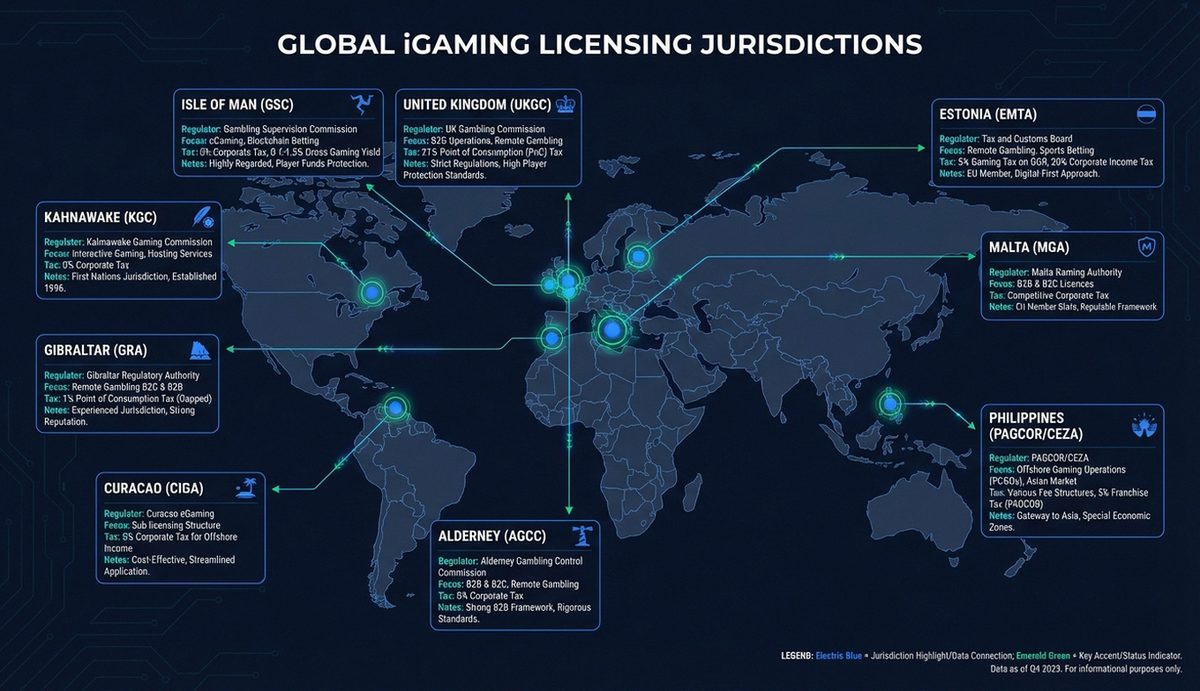
This comprehensive guide provides a deep dive into the leading igaming licensing jurisdictions for 2026, offering B2B insights tailored for operators. We will dissect the nuances of each major regulator, examining their requirements, associated costs, timelines, tax structures, market reputation, and the markets they typically serve. Our goal is to equip you with the knowledge needed to make an informed decision, ensuring your venture is built on a solid, legally compliant foundation.
The Strategic Imperative of iGaming Licensing
Securing an appropriate online gambling license is more than a legal formality; it’s a strategic business decision. It grants legitimacy, opens doors to payment processing solutions, attracts reputable software providers, and crucially, builds trust with players. Operating without a valid license, or with one ill-suited to your target markets, exposes your business to significant legal, financial, and reputational risks.
In 2026, the regulatory environment continues its trend towards increased scrutiny and localization. Operators must navigate a patchwork of national and international laws, making a robust iGaming license comparison indispensable. Factors such as responsible gaming mandates, anti-money laundering (AML) protocols, and data protection (GDPR, CCPA equivalents) are central to every jurisdiction’s framework and demand rigorous adherence.
Key Factors for iGaming License Comparison
Before delving into specific jurisdictions, understanding the critical evaluation criteria is paramount. Each factor plays a pivotal role in determining the suitability of an online gambling license for your specific business model and target audience.
Regulatory Reputation and Trust
The reputation of the licensing authority directly influences player trust and your ability to partner with tier-one service providers. Jurisdictions with stringent regulatory oversight often command higher respect but also come with more demanding compliance requirements.
Market Access and Restrictions
Different licenses permit operation in different markets. Some are globally recognized, while others are more regionally focused or restricted by national laws. Understanding where your chosen license allows you to operate is crucial for market penetration.
Costs: Application, Annual Fees, and Taxes
The financial outlay for an online gambling license varies significantly. This includes initial application fees, annual renewal charges, corporate tax rates, gaming taxes, and other administrative expenses. A comprehensive cost analysis is essential.
Timeline for Acquisition
From initial application to final approval, the licensing process can range from a few months to over a year. Business plans must account for these timelines to ensure a smooth launch or expansion.
Compliance Requirements and Operational Burden
Beyond initial setup, ongoing compliance is a continuous effort. This includes reporting, auditing, responsible gaming measures, AML policies, and technical infrastructure standards. The burden of compliance can vary greatly between igaming licensing jurisdictions.
Major iGaming Licensing Jurisdictions Compared (2026)
Here, we provide a detailed iGaming license comparison of the most prominent licensing bodies, offering insights into what operators can expect in 2026.
Malta Gaming Authority (MGA)
The Malta Gaming Authority (MGA) remains a gold standard in the iGaming world, renowned for its robust regulatory framework and comprehensive approach. Malta’s EU membership offers significant advantages for market access within the European Economic Area (EEA), making it a top choice for many international operators.
- Requirements: Rigorous due diligence on beneficial owners, detailed business plan, proof of funds, robust AML/CFT policies, technical infrastructure audits, responsible gaming measures, local key official appointment, and adherence to specific game integrity standards.
- Costs: Application fees typically range from €5,000 to €10,000. Annual compliance contributions can be up to €25,000, plus annual license fees which vary based on revenue, often up to €500,000.
- Timeline: Generally 6-12 months, depending on the completeness of the application and the complexity of the operation.
- Tax Rates: Corporate tax rate of 35%, but Malta operates a full imputation system, allowing for significant refunds to shareholders, effectively reducing the net tax to 5-10% for non-resident shareholders. Gaming tax applies based on revenue.
- Reputation: Excellent. Considered one of the most reputable and respected jurisdictions globally.
- Accepted Markets: Wide global acceptance, particularly strong within the EU/EEA, subject to local market regulations.
Curacao eGaming License
Curacao has long been a popular choice for start-ups and operators seeking a more cost-effective and faster route to market. While its reputation has faced scrutiny, recent reforms aim to strengthen its regulatory framework, making it a relevant option for a certain segment of the market in 2026. The Curacao gaming license covers all types of iGaming activities under a single master license.
- Requirements: Simpler than MGA, but still requires company incorporation, due diligence on UBOs, technical audit, and basic AML/KYC policies. New legislation (LOK) aims for more stringent requirements, including local presence and increased oversight.
- Costs: Historically, initial setup costs were around €20,000 – €30,000, with annual fees ranging from €10,000 – €20,000. These are expected to increase with the new LOK.
- Timeline: Traditionally 2-6 months, making it one of the fastest. New LOK implementation might extend this.
- Tax Rates: 0% gaming tax and 2% corporate income tax on profits for companies operating within the E-Zone, making it highly attractive from a fiscal perspective.
- Reputation: Moderate to improving. Historically seen as less stringent, but actively working to enhance its standing with upcoming legislative changes.
- Accepted Markets: Broad international acceptance, though some regulated markets may block Curacao-licensed operators. Often used for global markets where specific local licensing isn’t mandatory.
UK Gambling Commission (UKGC)
The UK Gambling Commission (UKGC) is arguably the most stringent and highly respected regulator globally, specifically for the UK market. An operator must hold a UKGC license to offer gambling services to consumers in Great Britain, making it essential for any operator targeting this lucrative market.
- Requirements: Extremely detailed business plan, robust financial standing, stringent AML/CFT and responsible gambling policies, comprehensive technical testing, fit and proper assessments for all key personnel, and a strong focus on consumer protection.
- Costs: Application fees vary by license type and gross gambling yield (GGY), ranging from a few thousand to over £100,000. Annual fees are also GGY-dependent, potentially reaching over £1 million for large operators.
- Timeline: Typically 9-18 months, often longer due to the depth of due diligence required.
- Tax Rates: High. Remote Gaming Duty (RGD) applies to GGY at 21% (as of 2026), plus standard UK corporate tax.
- Reputation: Exceptional. Considered the gold standard for player protection and regulatory oversight.
- Accepted Markets: Strictly Great Britain. Not a global license, but a must-have for the UK market.
Isle of Man Gambling Supervision Commission (GSC)
The Isle of Man gambling license, overseen by the Gambling Supervision Commission (GSC), offers a well-respected and stable regulatory environment. It balances robust oversight with a business-friendly approach, making it attractive for operators seeking a reputable jurisdiction outside the EU, yet with strong international standing.
- Requirements: Comprehensive due diligence, strong financial standing, detailed business plan, appointment of a Designated Official resident in the Isle of Man, robust technical infrastructure, and adherence to strict responsible gaming and AML policies.
- Costs: Application fee around £5,000. Annual license fees are typically £35,000 for a full license, plus additional costs for software supplier licenses if applicable.
- Timeline: Generally 3-6 months for a full license, provided all documentation is complete and compliant.
- Tax Rates: 0% corporate income tax for iGaming operations. Gaming duty is tiered, typically 1.5% for GGY up to £20 million, decreasing for higher turnovers.
- Reputation: Very good. Highly regarded for its stability, clear regulations, and commitment to player protection without being overly burdensome.
- Accepted Markets: Broad international acceptance, particularly strong in non-EU markets and jurisdictions recognizing OECD white-listed countries.
Gibraltar Regulatory Authority (GRA)
The Gibraltar gaming license, issued by the Gibraltar Regulatory Authority (GRA), is another highly respected and established option, particularly favored by larger, well-capitalized operators. Gibraltar’s position as a British Overseas Territory offers a unique blend of UK standards and a competitive tax regime.
- Requirements: Strict. Applicants must demonstrate a proven track record, significant financial resources, a detailed business plan, robust technical infrastructure, and a strong commitment to compliance, AML, and responsible gaming. A physical presence in Gibraltar is mandatory.
- Costs: Application fees range from £2,000 to £10,000. Annual license fees are typically £100,000 per license type.
- Timeline: 6-12 months, often longer due to the stringent pre-application assessment and due diligence.
- Tax Rates: Corporate tax rate of 12.5%. Gaming duty on GGY is 0.15% (with a minimum of £85,000 and a maximum of £425,000 per annum).
- Reputation: Excellent. Highly regarded, especially in the European market, alongside the MGA and UKGC.
- Accepted Markets: Wide international acceptance, strong within the EU/EEA (post-Brexit implications are managed), and other regulated markets.
Kahnawake Gaming Commission (KGC)
The Kahnawake Gaming Commission (KGC), established by the Mohawk Council of Kahnawake, has been licensing and regulating online gaming operations since 1999. It offers a stable, well-defined framework, primarily targeting North American and international markets.
- Requirements: Application for an Interactive Gaming License (IGL) or Client Provider Authorisation (CPA). Requires robust technical infrastructure, audited software, clear terms and conditions, and adherence to player protection and dispute resolution protocols.
- Costs: Application fee around $25,000 (USD). Annual license fee is typically $15,000 for a CPA. Hosting fees apply if using Kahnawake servers.
- Timeline: 4-8 months, depending on the completeness of the application.
- Tax Rates: No direct gaming tax. Corporate income tax may apply depending on the company’s structure and where profits are realized, but Kahnawake itself offers a tax-friendly environment.
- Reputation: Good. A long-standing and respected regulator, particularly strong for North American-facing operations.
- Accepted Markets: Strong in North America (excluding specific US states), and other international markets, subject to local regulations.
Alderney Gambling Control Commission (AGCC)
The Alderney Gambling Control Commission (AGCC) is a highly respected international regulator known for its stringent standards and focus on integrity. It’s often chosen by larger, established operators seeking a premium license that signifies strong regulatory compliance.
- Requirements: Very high standards of due diligence, significant financial backing, detailed business plan, robust technical infrastructure, strong responsible gaming and AML policies, and regular independent audits.
- Costs: Application fees vary, typically £17,500. Annual fees range from £35,000 to £175,000 depending on license type and scale of operations.
- Timeline: 6-12 months, reflecting the thoroughness of the process.
- Tax Rates: 0% corporate income tax. No gaming duty.
- Reputation: Excellent. Considered among the top-tier regulators globally, alongside the MGA and UKGC, particularly for B2B services.
- Accepted Markets: Wide international acceptance, particularly strong in markets that respect ‘white-listed’ jurisdictions.
Estonian Tax and Customs Board
Estonia has emerged as a forward-thinking jurisdiction for iGaming, particularly attractive for tech-savvy operators and those leveraging cryptocurrency. Its clear regulatory framework and EU membership offer a compelling alternative for an online gambling license.
- Requirements: Requires two licenses: one for operating gambling (activity license) and one for organizing gambling (operating permit). Strong focus on IT infrastructure, player protection, AML, and a local presence in Estonia.
- Costs: Application fees for both licenses typically around €48,000. Annual state fees can range from €32,000 to €3,200 depending on the type of gambling.
- Timeline: 4-6 months, often quicker than other EU jurisdictions due to streamlined processes.
- Tax Rates: Corporate income tax is 0% on retained and reinvested profits, 20% on distributed profits. Gaming tax applies, typically 5% of turnover for remote gambling.
- Reputation: Growing. Gaining recognition for its progressive approach and strong regulatory oversight within the EU.
- Accepted Markets: EU/EEA and other international markets, leveraging its EU membership.
Philippine Amusement and Gaming Corporation (PAGCOR)
PAGCOR licenses are unique in that they primarily target the offshore iGaming market, specifically for operators serving non-Philippine residents. While strict, it offers a regulated environment for operators looking to establish a presence in Asia.
- Requirements: Stringent. Requires a physical office in the Philippines, significant capital, detailed business plan, robust IT infrastructure, and strict adherence to PAGCOR’s regulatory framework, including responsible gaming and AML.
- Costs: Application fees can be substantial, often starting at $40,000 (USD) with significant annual license fees and regulatory levies, which are typically a percentage of GGY (e.g., 2% for POGO license holders).
- Timeline: 6-12 months, due to the comprehensive nature of the application and due diligence.
- Tax Rates: Historically, POGOs (Philippine Offshore Gaming Operators) paid a 5% gaming tax on gross gaming revenue. Recent legislative changes have refined this, but the tax burden remains significant. Corporate income tax also applies.
- Reputation: Specific. Well-known for its focus on the Asian offshore market. Its reputation is tied to its unique operational model.
- Accepted Markets: Primarily Asian markets outside of the Philippines. Not for Philippine residents.
Comprehensive iGaming License Comparison Table (2026)
This table provides a high-level overview, consolidating key metrics to facilitate your iGaming license comparison process. Please note that costs and timelines are estimates and can fluctuate based on specific circumstances and ongoing regulatory changes.
| Jurisdiction | Estimated Application/Annual Fees (EUR/USD) | Estimated Timeline | Corporate Tax Rate | Gaming Tax Rate | Reputation | Primary Markets |
|---|---|---|---|---|---|---|
| Malta (MGA) | €5k-€10k App, €25k+ Ann. Comp. + Rev-based License Fee | 6-12 months | 5-10% (effective) | Revenue-based | Excellent | Global, strong in EU/EEA |
| Curacao | €20k-€30k App, €10k-€20k Ann. (expected increase) | 2-6 months (potentially longer with LOK) | 2% (E-Zone) | 0% | Moderate/Improving | Global (non-regulated) |
| UK (UKGC) | £1k-£100k+ App, £1k-£1M+ Ann. (GGY-based) | 9-18 months | 19-25% | 21% (RGD) | Exceptional | Great Britain only |
| Isle of Man | £5k App, £35k Ann. | 3-6 months | 0% | 1.5% – 0.5% (tiered GGY) | Very Good | Global (non-EU focus) |
| Gibraltar (GRA) | £2k-£10k App, £100k Ann. | 6-12 months | 12.5% | 0.15% (min £85k, max £425k) | Excellent | Global, strong in EU/EEA |
| Kahnawake | $25k App, $15k Ann. (CPA) | 4-8 months | Dependent on structure | 0% | Good | North America, Global |
| Alderney (AGCC) | £17.5k App, £35k-£175k Ann. | 6-12 months | 0% | 0% | Excellent | Global (premium) |
| Estonia | €48k App (Activity + Operating), €3.2k-€32k Ann. | 4-6 months | 0% (retained), 20% (distributed) | 5% (remote gambling) | Growing | EU/EEA, Global |
| Philippines (PAGCOR) | $40k+ App, Significant Ann. + GGR levies | 6-12 months | 25% | 5% (GGR) | Specific (Asian offshore) |
Strategic Recommendations for Operators
Choosing the optimal online gambling license is a critical decision that should align with your long-term business strategy. Here are some practical tips and recommendations for operators and entrepreneurs navigating this complex landscape.
Define Your Target Markets First
Before comparing jurisdictions, clearly identify your primary and secondary target markets. This will immediately narrow down your options, as some licenses are market-specific (e.g., UKGC), while others offer broader international reach with varying degrees of local acceptance.
Assess Your Budget and Timeline
Be realistic about your financial resources and desired launch timeline. A Curacao gaming license might be suitable for a startup with limited capital and a need for speed, whereas an MGA or UKGC license demands significant investment and patience.
Consider Your Business Model
Are you a B2C operator, a B2B software provider, or both? Some jurisdictions offer specific licenses for different business types. For instance, the AGCC is highly respected for B2B licensing, while the MGA covers a wide spectrum.
Prioritize Compliance and Reputation
While cost is a factor, compromising on compliance or choosing a jurisdiction with a questionable reputation can lead to long-term issues, including payment processor difficulties, banking challenges, and player distrust. A solid iGaming license comparison must weigh reputation heavily.
Plan for Ongoing Compliance
Licensing is not a one-off event. Each jurisdiction has ongoing reporting, auditing, and regulatory requirements. Ensure your operational structure and resources can support these continuous obligations. This includes robust AML/KYC procedures, responsible gaming tools, and data protection measures.
Seek Expert Legal and Financial Advice
The complexities of international iGaming law, taxation, and company formation necessitate expert guidance. Engage specialized legal counsel and financial advisors who possess deep expertise in igaming licensing jurisdictions to navigate the intricacies and ensure a compliant and efficient setup.
The Future of iGaming Licensing
The landscape of online gambling license provision is continuously evolving. We anticipate a continued trend towards greater localization, stricter responsible gambling measures, and enhanced AML/CFT protocols globally. Emerging technologies like blockchain and AI are also influencing regulatory frameworks, prompting jurisdictions to adapt their rules to ensure fair play and consumer protection.
Operators must remain agile, proactively monitoring regulatory changes and being prepared to adapt their strategies. Jurisdictions that demonstrate flexibility while maintaining robust oversight, such as Estonia, may see increased interest, while established players like the Malta Gaming Authority will continue to set benchmarks for comprehensive regulation. The ongoing iGaming license comparison will remain a dynamic process, requiring constant re-evaluation.
Frequently Asked Questions
What is the most reputable iGaming license for global operations?
For global operations, the Malta Gaming Authority (MGA) and Alderney Gambling Control Commission (AGCC) are widely considered among the most reputable. They offer strong regulatory oversight, robust player protection, and broad international acceptance, making them ideal for operators targeting diverse markets outside of highly localized jurisdictions like the UK.
Which iGaming license is best for a new startup with limited budget?
Historically, the Curacao gaming license has been the most popular choice for startups due to its lower costs, faster processing times, and a single license covering all game types. However, operators should be aware of ongoing reforms in Curacao (LOK) that aim to increase stringency and potentially costs, which could impact its attractiveness for very low-budget ventures.
How long does it take to get an iGaming license in Malta?
Obtaining an iGaming license from the Malta Gaming Authority (MGA) typically takes between 6 to 12 months. This timeline can vary significantly based on the completeness of the application, the complexity of the business model, and the applicant’s responsiveness during the rigorous due diligence process.
What are the tax implications of an Isle of Man gambling license?
The Isle of Man offers a very attractive tax regime for iGaming operators, featuring a 0% corporate income tax rate. Gaming duty is also low, tiered from 1.5% for gross gambling yield (GGY) up to £20 million, decreasing for higher turnovers. This makes the Isle of Man a fiscally efficient jurisdiction.
Can a UK Gambling Commission license be used to operate outside the UK?
No, a UK Gambling Commission (UKGC) license is strictly for offering gambling services to consumers within Great Britain. It is not a global or international license. Operators wishing to serve other markets must obtain separate licenses from the relevant jurisdictions.
What is the primary advantage of a Curacao gaming license for operators?
The primary advantage of a Curacao gaming license has been its cost-effectiveness, speed of acquisition, and the ability to cover all forms of online gambling (casino, sports betting, lottery) under a single ‘master’ license. This simplifies the initial setup for many operators, particularly those targeting a broad, non-EU international audience.
Are there any emerging iGaming licensing jurisdictions to consider in 2026?
Yes, Estonia is a notable emerging jurisdiction, particularly for tech-forward operators and those interested in integrating cryptocurrency. Its EU membership, clear regulatory framework, and relatively efficient licensing process make it an increasingly attractive option for an online gambling license in 2026.
What are the main challenges when comparing igaming licensing jurisdictions?
The main challenges include the vast differences in regulatory requirements, varying costs (application, annual, tax), fluctuating timelines, and the specific market access each license grants. Keeping up with ongoing legislative changes, like those in Curacao, also adds complexity to any igaming license comparison.
Do I need a local presence to obtain a Gibraltar gaming license?
Yes, a physical presence in Gibraltar is a mandatory requirement for obtaining a Gibraltar gaming license from the GRA. This typically involves establishing an office and having key personnel based on the territory, demonstrating a substantive operational footprint.
What is the significance of the Kahnawake Gaming Commission for North American operators?
The Kahnawake Gaming Commission (KGC) holds significant importance for operators targeting the North American market. It is one of the oldest and most established online gaming regulators globally, providing a stable and recognized license that allows operators to serve players in various North American and international regions, subject to specific local laws.
Navigating the intricate world of igaming licensing jurisdictions requires a strategic and informed approach. This comprehensive iGaming license comparison highlights that there is no one-size-fits-all solution; the ideal online gambling license depends entirely on your business model, target markets, budget, and risk appetite. From the robust and reputable Malta Gaming Authority to the cost-effective Curacao gaming license, each jurisdiction presents unique opportunities and challenges.
As the iGaming industry continues its rapid evolution, staying abreast of regulatory changes and understanding the nuances of each licensing body will be paramount for sustained success. We strongly recommend engaging with experienced legal and financial advisors to conduct a thorough due diligence process tailored to your specific operational needs, ensuring compliance and fostering long-term growth in this competitive landscape.