
iGaming KYC & AML Compliance: Essential Strategies for Operators


Meeting iGaming KYC requirements is no longer just a regulatory obligation; it’s a fundamental pillar of sustainable and trustworthy online gambling operations. The landscape of online gambling AML compliance is constantly evolving, driven by global efforts to combat financial crime and protect consumers. For iGaming operators, understanding and implementing robust Know Your Customer (KYC) and Anti-Money Laundering (AML) protocols is paramount.
This comprehensive guide delves into the intricate world of iGaming compliance, offering a B2B perspective on regulatory frameworks, verification technologies, and best practices. We aim to equip operators with the knowledge to navigate complex requirements, ensuring adherence to standards set by bodies like FATF, EU directives, and national regulators, while also preparing for future regulatory shifts, including potential changes impacting 2026.
Understanding the iGaming Regulatory Landscape
The regulatory environment for iGaming is a complex tapestry woven from international standards, regional directives, and national laws. At its core, this framework is designed to prevent financial crime, protect vulnerable individuals, and maintain the integrity of the gambling industry. Operators must grasp these foundational elements to build an effective compliance strategy.
The push for stringent anti money laundering casino measures has intensified globally, impacting how operators conduct their business. Regulators are increasingly scrutinizing customer onboarding and transaction monitoring processes, making a proactive approach to compliance essential for any successful iGaming venture.
The Genesis of AML/CTF in Gambling
Historically, the gambling sector has been identified as susceptible to money laundering and terrorist financing (ML/TF) risks. This vulnerability stems from the high volume of transactions, the potential for anonymity, and the rapid movement of funds. Consequently, international bodies and national governments have progressively introduced stricter regulations to mitigate these risks within the gambling industry.
The evolution of these regulations reflects a growing understanding of financial crime methodologies. From basic identity checks to sophisticated transaction monitoring systems, the demands on iGaming operators have grown significantly, emphasizing the need for a robust igaming compliance guide.
Key Global and Regional Frameworks
The Financial Action Task Force (FATF) stands as the global standard-setter for AML/CTF. Its recommendations provide the blueprint for national legislation, including specific guidance for the gambling sector. Adherence to FATF guidelines is crucial for international operators and those seeking licenses in multiple jurisdictions.
In Europe, the Anti-Money Laundering Directives (AMLDs) provide a harmonized framework. The 5th and 6th AMLDs have particularly tightened requirements for iGaming, focusing on beneficial ownership, virtual currencies, and enhanced cooperation among financial intelligence units. These directives set the baseline for national laws across EU member states, directly influencing online gambling AML compliance.
The Pillars of iGaming KYC Requirements
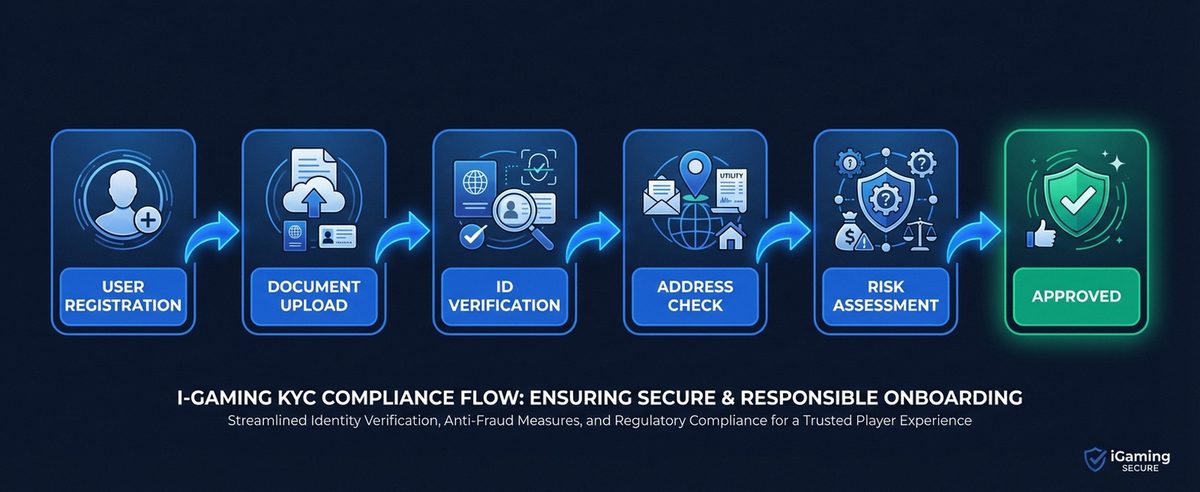
At the heart of effective AML strategies lies robust Know Your Customer (KYC) procedures. These procedures are designed to verify the identity of customers, understand their financial activities, and assess their risk profile. For iGaming operators, comprehensive KYC verification gambling processes are non-negotiable for maintaining regulatory standing.
Implementing strong iGaming KYC requirements protects operators from fraud, reduces the risk of money laundering, and builds trust with both customers and regulators. It’s a critical investment in the long-term viability of the business.
Customer Due Diligence (CDD) Explained
Customer Due Diligence (CDD) is the foundational element of KYC. It involves identifying the customer and verifying their identity using reliable, independent source documents, data, or information. For iGaming, this typically includes collecting personal details such as name, address, date of birth, and nationality.
CDD also extends to understanding the purpose and intended nature of the business relationship. Operators must assess the risk associated with each customer, categorizing them into low, standard, or high-risk profiles based on various factors. This risk-based approach dictates the level of scrutiny applied to the customer’s activities.
Enhanced Due Diligence (EDD) Triggers
For customers identified as high-risk, or in situations where there are suspicions of money laundering or terrorist financing, Enhanced Due Diligence (EDD) is mandatory. EDD involves deeper scrutiny and additional verification measures beyond standard CDD. Triggers for EDD can include large deposits, unusual transaction patterns, customers from high-risk jurisdictions, or Politically Exposed Persons (PEPs).
EDD might entail gathering additional information on the source of funds or wealth, conducting more intensive background checks, or requiring additional verification documents. The goal is to obtain a more comprehensive understanding of the customer and their activities to mitigate elevated risks effectively. This is a crucial aspect of know your customer igaming protocols.
Document Verification: What’s Required?
Document verification is a cornerstone of iGaming KYC requirements. Operators typically require official, government-issued identification documents to verify a customer’s identity. Common acceptable documents include passports, national ID cards, and driving licenses. These documents must be valid, legible, and match the customer’s provided details.
Proof of address (PoA) is also frequently required, usually in the form of utility bills, bank statements, or official correspondence, typically no older than three to six months. In certain circumstances, particularly during EDD, proof of funds (PoF) or source of wealth (SoW) may be requested to ascertain the legitimate origin of significant deposits. This ensures a thorough anti money laundering casino check.
Implementing Robust Online Gambling AML Compliance
Beyond initial KYC, ongoing online gambling AML compliance requires continuous monitoring and proactive measures. Operators must establish robust internal controls and systems to detect and prevent illicit financial activities throughout the customer lifecycle. This involves a dynamic and adaptive approach to risk management.
Effective AML compliance extends to every facet of an iGaming operation, from technology infrastructure to staff training. It’s about creating a culture of vigilance that safeguards the business from exploitation by criminals.
Risk-Based Approach (RBA)
The Risk-Based Approach (RBA) is a core principle in modern AML frameworks. Instead of a one-size-fits-all solution, RBA mandates that operators identify, assess, and understand the money laundering and terrorist financing risks they face. Based on this assessment, they must then apply proportionate measures to mitigate those risks.
An effective RBA allows resources to be allocated most efficiently, focusing greater attention on higher-risk customers and transactions. This approach makes online gambling AML compliance more flexible and cost-effective, while still achieving the desired level of protection. It’s a strategic element of any igaming compliance guide.
Transaction Monitoring and Suspicious Activity Reporting (SARs)
Continuous transaction monitoring is vital for detecting unusual or suspicious patterns of activity that may indicate money laundering. This involves analyzing customer betting behavior, deposit and withdrawal methods, and the volume and frequency of transactions. Advanced analytical tools are often employed to flag anomalies that human eyes might miss.
When suspicious activity is identified, iGaming operators are legally obliged to file a Suspicious Activity Report (SAR) with the relevant Financial Intelligence Unit (FIU). This reporting is critical for law enforcement efforts to combat financial crime and is a non-negotiable aspect of anti money laundering casino operations.
Sanctions Screening and Politically Exposed Persons (PEPs)
Operators must routinely screen their customer base against international sanctions lists (e.g., OFAC, EU sanctions) to ensure they are not inadvertently engaging with prohibited individuals or entities. This is a dynamic process, as sanctions lists are frequently updated.
Similarly, identifying Politically Exposed Persons (PEPs) and their close associates or family members is a critical AML requirement. PEPs, by virtue of their position, pose a higher risk of bribery and corruption. Enhanced Due Diligence (EDD) must be applied to PEPs, requiring a deeper understanding of their source of wealth and the origin of their funds, reinforcing know your customer igaming principles.
Leveraging Technology for KYC Verification Gambling
The scale and speed of iGaming operations necessitate advanced technological solutions for effective KYC and AML compliance. Manual processes are often too slow, prone to error, and costly for high-volume environments. Technology providers have stepped up to offer sophisticated platforms that streamline verification and monitoring.
Embracing these technologies is not just about efficiency; it’s about accuracy and staying ahead of increasingly sophisticated financial criminals. Robust KYC verification gambling technology is a competitive differentiator.
Automated vs. Manual Verification: A Strategic Choice
Automated KYC solutions leverage AI, machine learning, and vast databases to perform identity verification, document authentication, and background checks almost instantly. This significantly speeds up the onboarding process, improves customer experience, and reduces operational costs. Automated systems can handle high volumes and detect sophisticated fraud attempts.
While automation is highly efficient, manual verification still plays a role, particularly for complex cases flagged by automated systems, or for EDD. A hybrid approach, where automation handles the majority and human experts review exceptions, often represents the most balanced and effective strategy for iGaming KYC requirements.
Leading KYC/AML Technology Providers
Several prominent technology providers specialize in KYC and AML solutions tailored for the iGaming sector. Companies like **Jumio** offer identity verification, document authentication, and facial recognition, ensuring robust checks against global databases. Their solutions help operators meet stringent online gambling AML compliance.
**Onfido** provides AI-powered identity verification, matching customer identities to their real-world selves using document and biometric checks. **Sumsub** offers a comprehensive platform for identity verification, AML screening, and fraud prevention, supporting a wide range of global jurisdictions. These providers are crucial partners for an effective igaming compliance guide.
The Role of AI and Machine Learning
Artificial Intelligence (AI) and Machine Learning (ML) are transforming KYC and AML compliance. AI algorithms can analyze vast datasets to identify patterns indicative of fraud or money laundering with greater accuracy and speed than traditional methods. ML models continuously learn from new data, improving their ability to detect emerging threats.
These technologies are particularly effective in transaction monitoring, anomaly detection, and risk scoring. They enable proactive identification of suspicious behavior, reducing false positives and allowing compliance teams to focus on genuine risks. AI-driven solutions are becoming indispensable for advanced know your customer igaming strategies.
Jurisdiction-Specific iGaming Compliance Guide
While global standards like FATF provide a baseline, iGaming operators must navigate a patchwork of jurisdiction-specific requirements. Each licensing authority and national regulator may impose additional or more stringent rules, making a tailored approach to compliance essential. Understanding these nuances is key to operating legally and safely across different markets.
A thorough igaming compliance guide must address these regional variations, as penalties for non-compliance can be severe and jurisdiction-specific. Operators need to stay informed about local legislative changes and adapt their processes accordingly.
The European Union: 6AMLD and Beyond (2026 implications)
The EU’s 6th Anti-Money Laundering Directive (6AMLD) has harmonized and strengthened criminal law provisions relating to money laundering across member states. It expands the list of predicate offenses, introduces corporate criminal liability, and enhances cooperation. For iGaming, this means a more rigorous approach to identifying and reporting suspicious activities.
Looking ahead, discussions around a potential 7th AMLD or further regulatory refinements are ongoing. Operators should anticipate a continued trend towards greater transparency and stricter enforcement. By 2026, the regulatory landscape is expected to be even more consolidated, with a greater emphasis on cross-border data sharing and enhanced AML supervision. Operators must ensure their iGaming KYC requirements are future-proofed.
United Kingdom: UKGC’s Strict Stance
The UK Gambling Commission (UKGC) is renowned for its stringent regulatory framework, particularly concerning AML and social responsibility. The UKGC expects operators to implement robust risk assessments, comprehensive CDD/EDD procedures, and effective transaction monitoring systems. There’s a strong emphasis on proof of funds and source of wealth, especially for high-value customers.
The UKGC regularly issues updated guidance and imposes significant fines for compliance failures, underscoring the importance of continuous vigilance. Operators must demonstrate a clear understanding of their online gambling AML compliance obligations and have demonstrable controls in place.
Malta: A Hub for iGaming Compliance
Malta, a prominent iGaming hub, operates under the Malta Gaming Authority (MGA) which aligns its regulations closely with EU AMLDs and FATF recommendations. The MGA requires licensed operators to appoint an AML/CFT Compliance Officer and adhere to comprehensive KYC and AML procedures. This includes detailed risk assessments and ongoing monitoring.
The MGA’s framework is designed to foster a secure and compliant gaming environment. Operators with MGA licenses must demonstrate continuous adherence to these strict requirements, making Malta a benchmark for know your customer igaming practices.
Best Practices for Sustainable iGaming Compliance
Achieving and maintaining compliance is an ongoing journey, not a one-time task. Best practices involve embedding compliance into the operational DNA of an iGaming business, fostering a culture where every employee understands their role in preventing financial crime. This proactive approach ensures long-term regulatory adherence and business integrity.
Beyond meeting minimum requirements, embracing best practices enhances an operator’s reputation, reduces operational risk, and positions them as a responsible industry leader. It’s an investment that pays dividends in trust and stability.
Continuous Training and Awareness
The human element remains critical in compliance. Regular and comprehensive training for all staff, from customer service to senior management, is essential. Employees must understand the latest AML regulations, internal policies, and how to identify and report suspicious activity. Training should be tailored to different roles and updated frequently to reflect new risks and regulatory changes.
A strong compliance culture starts with informed and engaged employees who understand the importance of their role in upholding iGaming KYC requirements and anti money laundering casino protocols.
Regular Audits and Review Mechanisms
Independent audits and internal reviews are crucial for assessing the effectiveness of compliance programs. These evaluations help identify weaknesses, ensure adherence to policies, and confirm that systems are functioning as intended. Regular reviews should cover all aspects of KYC and AML, including customer onboarding, transaction monitoring, and reporting procedures.
Feedback from audits should be used to continuously improve compliance frameworks, ensuring they remain robust and adaptive to evolving threats and regulatory expectations. This iterative process is key to a dynamic igaming compliance guide.
Data Protection and Privacy Considerations
While stringent KYC requires collecting sensitive personal data, operators must also adhere to strict data protection and privacy regulations, such as GDPR in Europe. Balancing compliance with data privacy is a delicate act. Operators must ensure that personal data is collected, stored, processed, and secured in a manner that complies with all relevant laws.
Transparency with customers about data usage, secure data storage, and robust access controls are paramount. Demonstrating a commitment to data privacy builds customer trust and mitigates legal and reputational risks. This is an integral part of know your customer igaming practices.
The Dire Consequences of Non-Compliance
The repercussions of failing to meet iGaming KYC requirements and online gambling AML compliance can be devastating for operators. Regulators worldwide are increasingly imposing severe penalties, reflecting a zero-tolerance approach to financial crime in the sector. These consequences extend far beyond mere financial costs.
Understanding the full scope of potential penalties underscores the critical importance of a robust and proactive compliance strategy. It’s a stark reminder that compliance is not just a cost, but an essential investment in business continuity and reputation.
Financial Penalties and Regulatory Sanctions
Regulatory bodies possess the authority to levy substantial fines, which can run into millions of pounds or euros, for breaches of AML and KYC regulations. Beyond monetary penalties, operators may face license suspensions or even revocation, effectively ending their ability to operate in a given jurisdiction. These sanctions can cripple an iGaming business, impacting its profitability and market access.
The financial impact of penalties is often compounded by the costs associated with remediation efforts, legal fees, and increased regulatory scrutiny, making non-compliance an extremely expensive oversight for anti money laundering casino operations.
Reputational Damage and Loss of Trust
Perhaps even more damaging than financial penalties is the irreparable harm to an operator’s reputation. Public announcements of compliance failures can severely erode customer trust, leading to account closures, reduced new registrations, and a significant drop in player engagement. Business partners, payment providers, and investors may also withdraw support, seeing the operator as a high-risk entity.
Rebuilding a tarnished reputation is a long and arduous process, often requiring significant marketing and PR investment. In a competitive market, a reputation for poor compliance can be a death knell, highlighting the critical importance of a comprehensive igaming compliance guide.
Frequently Asked Questions
What are the primary iGaming KYC requirements for new players?
Primary iGaming KYC requirements include verifying a player’s identity (name, date of birth), address, and sometimes source of funds. This typically involves collecting government-issued ID, proof of address (utility bill), and potentially bank statements, ensuring compliance with anti money laundering casino regulations.
How does online gambling AML compliance differ across jurisdictions like the UK and Malta?
While both the UKGC and MGA align with FATF and EU AMLDs, the UKGC often has more prescriptive requirements, especially regarding proof of funds and affordability checks. Malta focuses on a robust risk-based approach and detailed internal controls, both aiming for stringent online gambling AML compliance.
What is Enhanced Due Diligence (EDD) in know your customer iGaming and when is it applied?
EDD in know your customer iGaming is applied to high-risk customers or transactions. Triggers include large deposits, unusual activity, customers from high-risk jurisdictions, or Politically Exposed Persons (PEPs). It involves deeper scrutiny, additional document requests, and more intensive background checks to mitigate elevated risks.
Can automated KYC verification gambling solutions fully replace manual checks?
Automated KYC verification gambling solutions significantly streamline the process and handle most cases efficiently. However, they typically cannot fully replace manual checks. A hybrid approach, where automated systems flag complex cases for human review, is generally considered best practice for robust iGaming KYC requirements.
What role do technology providers like Jumio, Onfido, and Sumsub play in iGaming compliance?
These technology providers offer platforms that automate identity verification, document authentication, biometric checks, and AML screening. They help iGaming operators meet compliance obligations by providing accurate, fast, and scalable solutions for iGaming KYC requirements and online gambling AML compliance, reducing manual effort and fraud risk.
How are FATF guidelines relevant to anti money laundering casino operations?
FATF guidelines are the international standard for combating money laundering and terrorist financing. They provide the foundational recommendations that national regulators, including those overseeing anti money laundering casino operations, use to develop their specific laws and regulations, ensuring global consistency in compliance efforts.
What are the implications of the EU’s 6AMLD for iGaming operators, especially towards 2026?
The 6AMLD expands predicate offenses for money laundering, introduces corporate liability, and improves cross-border cooperation. Towards 2026, operators can expect further consolidation and potentially stricter enforcement of these harmonized rules, demanding more rigorous online gambling AML compliance and proactive adaptation.
What are the common penalties for non-compliance with iGaming KYC requirements?
Penalties for non-compliance with iGaming KYC requirements can be severe, including substantial financial fines, license suspensions or revocations, and significant reputational damage. These consequences highlight the critical importance of adhering to every aspect of the igaming compliance guide.
How often should an iGaming operator review and update their igaming compliance guide and procedures?
An iGaming operator should review and update their igaming compliance guide and procedures at least annually, or immediately whenever there are significant changes in regulations, business operations, technology, or risk assessments. Continuous monitoring and adaptation are key to effective online gambling AML compliance.
What is the importance of staff training in maintaining robust know your customer igaming processes?
Staff training is paramount. Well-trained employees are the first line of defense, equipped to identify suspicious activities, correctly apply KYC procedures, and understand their reporting obligations. Continuous training ensures the entire team is aligned with the latest know your customer igaming protocols and regulatory changes, fostering a strong compliance culture.
Navigating the complex world of iGaming KYC requirements and online gambling AML compliance is a continuous challenge, yet an indispensable aspect of operating a successful and reputable online gambling business. From understanding the foundational regulatory frameworks set by FATF and EU Directives to implementing advanced technology solutions and adhering to jurisdiction-specific rules, operators must adopt a holistic and proactive approach.
By investing in robust know your customer igaming processes, leveraging leading technology providers, fostering a culture of compliance through continuous training, and staying ahead of evolving regulations—including those anticipated for 2026—iGaming operators can safeguard their operations, protect their customers, and secure their long-term success. Embrace this comprehensive igaming compliance guide to build trust, mitigate risks, and thrive in a regulated digital landscape. Partner with compliance experts to future-proof your anti money laundering casino strategies today.